


One minute, your car starts without a problem. The next morning? Nothing. Just silence. You try charging it overnight, thinking it’ll bounce back — but it doesn’t. The voltage shows up, yet the engine still won’t turn over. Knowing how to safely jump start a car can get you back on the road fast — and help you recognize when a jump-start is no longer enough.
Does Revving a Car When Jump Starting Help?
When using traditional jumper cables, some drivers rev the donor vehicle slightly in the belief that it will provide additional charging current. While a moderate increase in engine speed may help the alternator produce more power, modern vehicles often regulate charging electronically, so excessive revving usually offers little benefit and is generally unnecessary.
For portable jump starters, the situation is different. A jump starter carries its own stored energy and does not rely on a second vehicle or alternator output. As long as the unit is properly charged and correctly connected, revving an engine is not part of the jump-start procedure.
When to Replace a Dead Battery
A successful jump start does not always mean the battery is healthy. If the vehicle repeatedly requires jump-start assistance, struggles to crank after charging, or loses power after sitting for a short period, the battery may be unable to maintain a usable charge.
Most automotive batteries gradually lose capacity as they age. Repeated deep discharges, extreme temperatures, and long periods of inactivity can accelerate this process. While a portable jump starter can help get the vehicle running again, it cannot restore lost battery capacity.
If jump starts become a frequent necessity, having the battery tested, battery replacement is often the best next step. Replacing a weak battery before it fails completely can help avoid unexpected breakdowns and reduce the risk of being stranded when the vehicle is needed most.
What Not to Do When Jumping a Car Battery?
Jump-starting a car is straightforward when done correctly — but a few common mistakes can damage your vehicle. Here’s what you should avoid:
1. Connecting the clamps in the wrong order
Old-style jumper cables: Always connect the red (positive) clamp first, then the black (negative) clamp — to the negative terminal or a solid metal ground point on the engine block. Reversing the order risks sparking or electrical damage.
Modern jump starters: Most units come with built-in reverse-polarity protection and spark-free connections — but users should still follow the recommended connection procedure.
Disconnecting in the wrong order
Removal must follow the reverse sequence: black clamp first, then red. Skipping this step or rushing through it can cause a voltage spike that damages sensitive electronics in your vehicle.
2. Skipping the owner’s manual for newer vehicles
Hybrids and electric vehicles often have specific jump-start points or restrictions that differ from conventional cars. Always check your owner’s manual before proceeding — using the wrong terminal on these vehicles can cause serious damage.
3. Not recharging the battery after a jump
A jump-start gets your engine running, but it doesn’t fully recharge the battery. After starting the car, keep the engine running or take a drive of at least 20 to 30 minutes afterward to allow the battery to recover sufficient energy for future starts. Failing to do this puts extra strain on the system and increases the chance of a repeat failure.
4. Repeatedly jump-starting without addressing the root cause
If your battery keeps dying and you keep jump-starting it without proper recharging or replacement, you may accelerate battery deterioration and reduce its ability to hold a charge. A recurring dead battery is a clear sign it may need to be tested or replaced.
What Kills a Car Battery the Most?
Car battery failure is rarely the result of a single event. In most cases, it’s a combination of internal chemical wear and everyday usage habits that quietly drain battery life over time. In fact, less than 7% of battery failures are caused by factory defects — meaning the way you use and maintain your battery is what matters most.
Here are the most damaging factors:
- Parasitic drain from accessories
Dash cams, USB chargers, and other aftermarket accessories continue drawing power even when the car is off. Over time — especially if the vehicle sits unused for days or weeks — this hidden drain gradually weakens the battery.
- Frequent short trips
Short drives don’t give the alternator enough time to fully recharge the battery after startup. This leaves the battery in a persistently low state of charge, which promotes sulfation — a buildup that shortens overall lifespan.
- Using the wrong charger
Generic or basic 12V power supplies may appear to charge the battery, but they often can’t deliver the correct charging profile. This prevents the battery from reaching a full charge and may cause slow, ongoing discharge.
- Leaving lights on overnight
Even a single night with headlights or interior lights left on can significantly drain the battery. Repeated incidents accelerate wear and increase the risk of sudden failure.
- Internal chemical degradation
Beyond usage habits, batteries also deteriorate from within. Sulfation, acid stratification, dead cells, and heat damage all contribute to reduced capacity over time. If your battery voltage is stuck around 10V, it likely indicates internal damage that regular charging cannot reverse.
- Extended periods without use
Batteries naturally lose charge when left unused. If a vehicle sits for too long without being started or connected to a maintainer, the available starting power can gradually fall below the level needed to start the vehicle.
What Are Common Mistakes When Jumping a Car?
Even experienced drivers can encounter problems during a jump start. Understanding these common situations can help improve safety and reduce the risk of vehicle or battery damage.
1.Using a jump starter that is too small for the vehicle
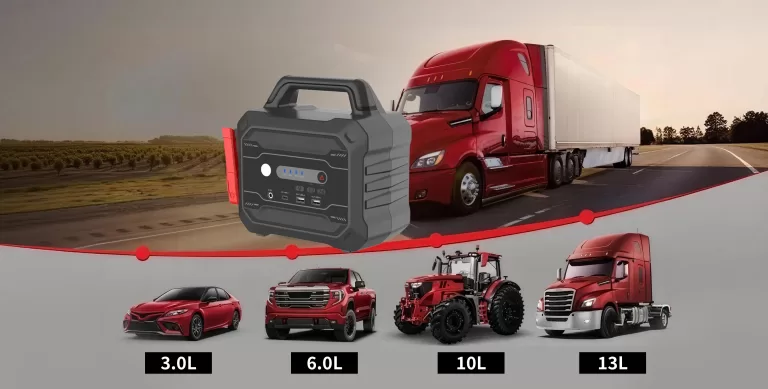
Not all jump starters are designed for the same applications. A compact jump starter may work well for small gasoline cars but struggle with large diesel engines, commercial vehicles, or equipment with high cranking requirements. Always verify the engine displacement and peak current rating before purchasing or using a portable jump starter or heavy duty jump starter.
2.Failing to keep the jump starter properly charged
A portable jump starter should be inspected and recharged when necessary, especially before long trips or after extended storage. Allowing the battery to remain deeply discharged for long periods can reduce overall performance and may leave the unit unable to provide sufficient starting power when needed. Although LiFePO4 batteries offer excellent low self-discharge characteristics and retain charge better than many other battery chemistries, occasional battery checks help ensure the jump starter remains ready for reliable operation.
3.Storing a lithium jump starter in extreme temperatures
Excessive heat and prolonged freezing conditions can accelerate battery degradation and reduce available starting power. For the best long-term performance, store the jump starter in a dry location within the temperature range recommended.
FAQs
1.How many amps to jump start a Subaru?
Most Subaru gasoline vehicles can be jump-started with a portable jump starter rated between 1000A and 2000A peak current. Larger engines, cold-weather conditions, or severely discharged batteries may require higher output. A high-capacity model such as the CARKU 3250A provides additional starting power and also includes a built-in air compressor for tire inflation, combining two roadside emergency tools in one device.
2.Are there any tools that help with safely jump starting a car?
Yes — two main options: Old-Style Jumper Cables. Affordable and widely available, but require a second vehicle and strict attention to connection order. A jump starter— no second vehicle needed. Most include reverse-polarity protection, spark-free clamps, and LED indicators. Some double as a power bank or flashlight. The safer, more convenient choice for solo drivers.