
When reading this topic, people will ask what LiFePO4 Battery is and what Lithium Battery is. so let’s figure out what you are wondering about.
What is lifepo4 and lithium batteries?
When you open up a lithium battery pack, one of the first things you’ll see is a series of battery cells arranged neatly alongside a control circuit board. These cells come in three common shapes: cylindrical, prismatic, and pouch. In this article, we’ll focus specifically on LiFePO4 (Lithium Iron Phosphate) cells, each rated at 3.2 volts — a format widely used for its safety, stability, and long cycle life.
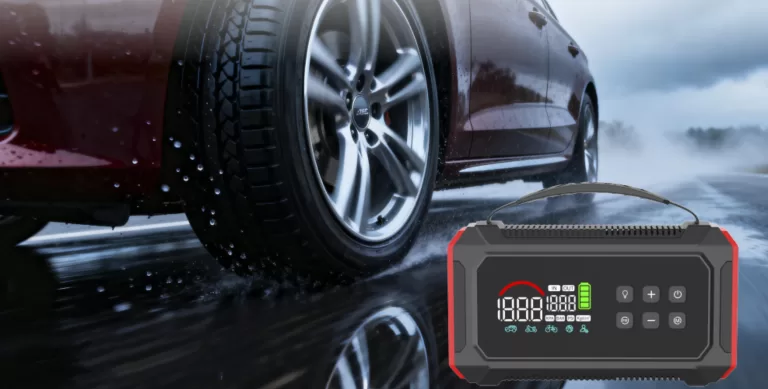
In the chart, you will see the obvious comparison between LiFePO4 & Lithium Battery, when they are used in car jump starter.Attention: the same size of housing to hold battery.
| Item | Lithium | LiFePO4 |
| Cell Voltage | 3.7V | 3.2V |
| Cell quantity | 3 | 4 |
| Capacity/Cell | 5000 mAh | 2500 mAh |
| Total Capacity | 15000 mAh | 10000 mAh |
| Max Start Current | 500A(Start 5.0L Car) | 300A (Start 3.0 Liter Car) |
| Capacity (Wh /L) | About 300 Wh/L | About 180 Wh/L |
| Capacity (WH/KG) | About 150 Wh/kg | About 85 Wh/kg |
| Lifetime | 1000 Cycles | 2000 Cycles |
| Safety | common | good |
| Operating Temp. | -20 – 60℃ | -20 – 60℃ |
| Storage Temp. | -20 – 45℃ | -20 – 45℃ |
From the chart, lithium batteries deliver higher energy density and peak starting current up to 500A, perfect for demanding power applications. LiFePO4 batteries prioritize safety and durability with 2000 charge cycles, double that of standard lithium—ideal for extended service life.
How to charge a lifepo4 battery?
LiFePO4 is much safer than Lithium, In the chart, you will see the obvious methods to charge a LiFePO4 Battery, when they are used in car jump starter.
| Step | Description | Best Practices |
| 1.Use a Compatible Charger | Always use a charger specifically designed for LiFePO4 chemistry. | Avoid using chargers meant for lead-acid or traditional lithium-ion batteries. |
| 2.Correct Charging Voltage | The ideal charging voltage is 14.4V–14.6V for a 12V LiFePO4 battery. | Never exceed 14.6V to prevent damage. |
| 3.Recommended Charging Current | Charge at 0.2C to 0.5C rate of the battery’s capacity (a 100Ah battery should be charged at 20A–50A). | High current reduces charge time but may slightly reduce battery lifespan. |
| 4. Monitor Battery Temperature | Charge within safe temperature range: **0°C to 45°C** for charging, **-20°C to 60°C** for discharging. | Avoid charging in freezing temperatures to prevent lithium plating. |
| 5. Use BMS-Protected Batteries | Ensure your LiFePO4 battery has a built-in **Battery Management System (BMS)** for protection. | The BMS safeguards against overcharge, overcurrent, and overheating. |
| 6. Stop at Full Charge | The battery is fully charged when the voltage stabilizes around 14.6V and the current drops to near 0A. | Do not trickle-charge—LiFePO4 doesn’t require float charging like lead-acid batteries. |
| 7. Avoid Overcharging | Overcharging can degrade battery health and cause safety issues. | Use automatic cut-off chargers or smart solar charge controllers. |
| 8. Optional: Solar Charging | LiFePO4 batteries can be charged using solar panels with appropriate MPPT controllers configured for 14.4–14.6V output. | Ensure the charge controller supports LiFePO4 profiles. |
- For small batteries (e.g., motorcycle, scooter): Use a 14.6V 2A–10A smart charger for slow and safe charging.
- Off-grid or solar setups: Use MPPT controllers set to LiFePO4 charging profiles for best results.
- Cold climates: Consider a self-heating LiFePO4 battery or delay charging until the battery warms above 0°C.
Are lifepo4 batteries safe?
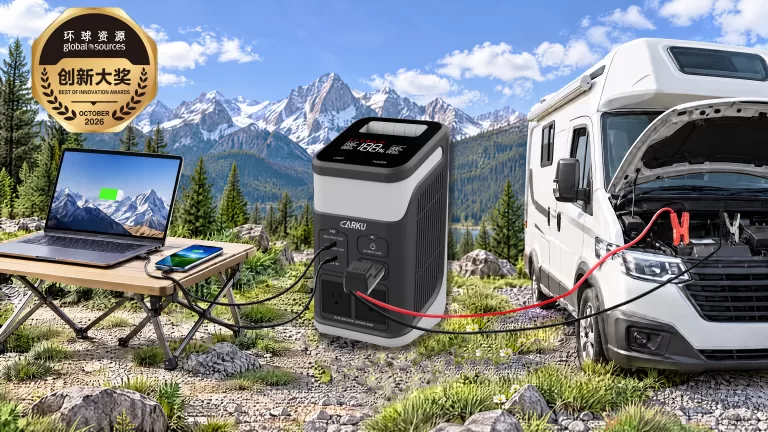
The PB-T30CD represents the next generation of portable power stations, combining 259Wh LiFePO4 battery technology with a 300W pure sine wave inverter to deliver clean, stable power anywhere. Designed for professionals and outdoor enthusiasts alike, this unit features MPPT solar charging capability and USB-C Power Delivery 45W for fast device charging.
LiFePO4 batteries have dramatically reshaped how we think about energy storage. Their robust chemical structure makes them ideal for demanding applications, from electric vehicles to solar systems and even Car Jump Starters, where reliability and safety are critical.
Are lithium batteries safe?
In the broader category of lithium batteries, lithium-ion technology continues to play a central role in powering modern life. Whether it’s your smartphone, laptop, or electric car, the appeal lies in its lightweight construction, high energy density, and quick recharge capabilities — all of which support today’s on-the-go lifestyle.
However, not all lithium cells are created equal. Depending on your application, you’ll need to choose between two performance profiles: power cells and energy cells. Power cells are engineered to deliver bursts of high current, making them perfect for starting engines or rapid acceleration in EVs. On the other hand, energy cells are optimized to store and release energy over a longer duration, ideal for applications like battery backup systems or extended-range travel. Understanding this distinction is key to selecting the right battery for your specific needs.
What difference series of Lifepo4 batteries?
Carku’s MB Series is a next-generation lineup of 12V LiFePO4 motorcycle batteries, precisely engineered for different engine types and riding needs. With reliable 12.8V output, ultra-safe chemistry, and a cycle life exceeding 3,000 times, each model in the MB family offers targeted performance backed by advanced Battery Management System (BMS) technology.
Now, let’s break down the key differences across the MB-01A and MB-01B models to help you choose the right power source for your ride.
Built on the same form factor as the MB-01A, the MB-01B steps up to 1600mAh (20.48Wh) while maintaining the same 113×69×87mm size and 200A peak current. It’s the smarter choice for users with slightly higher energy demands—such as those running extra lights, a USB charger, or a digital dashboard—without sacrificing weight or space.
For riders with motorcycles that demand more robust starts and longer energy delivery, the MB-02 offers the same 1600mAh capacity, but is optimized for improved thermal dissipation and load tolerance. Weighing 400g, it’s built to support motorcycles with moderate electronic loads while maintaining the core benefits of LiFePO4: high thermal stability, safe charging up to 14.6V, and zero memory effect.
All models share Carku’s signature LiFePO4 chemistry, delivering:Over 3000 cycles of performance
1.Zero risk of leakage
2.Safe charging up to 14.6V / 30A
3.Consistent output even in harsh weather
4.No maintenance, no compromises. Just clean, reliable starts—every time.
From scooters to standard motorcycles, there’s a Carku MB battery built to power your journey with precision.For Starting Battery ODM/OEM Solutions, secure your exclusive quotation now!
FAQS
1).how long do lithium batteries last?
2–3 years.Typically, a modern lithium battery’s lifespan is 2–3 years, which is about 300 to 500 fully charge cycles as rated by manufacturers. 2) This doesn’t mean that your jump starter will die or won’t work after 2–3 years.
2–3 years.Typically, a modern lithium battery’s lifespan is 2–3 years, which is about 300 to 500 fully charge cycles as rated by manufacturers. 2) This doesn’t mean that your jump starter will die or won’t work after 2–3 years.
2).how long do lifepo4 batteries last?
While lead acid batteries and AGM options often need replacing every 3 to 5 years, quality LiFePO4 batteries can last up to 10 years or more with proper use and storage. Most lithium-iron phosphate batteries are rated for 2,000 to 5,000 charge cycles.
3).Can you use a portable jump starter on an electric car?
Most EVs carry the same type of 12V battery you’ll find in ICE cars, meaning you can technically jump start it the same way. This battery is different to the larger, main battery pack used to power the motor of an EV, which is typically made from lithium-ion.