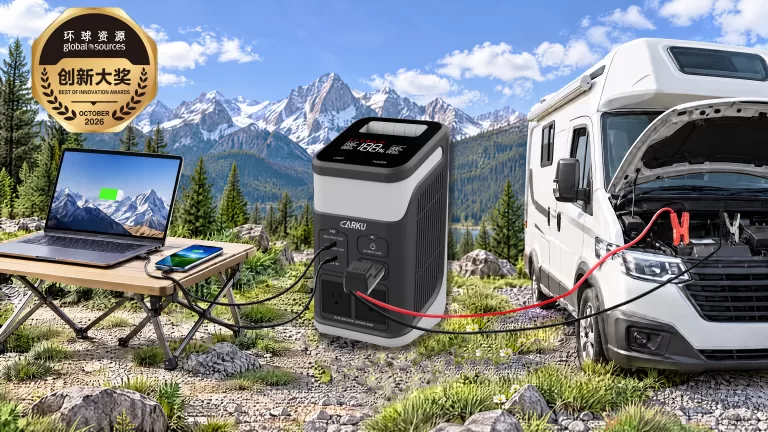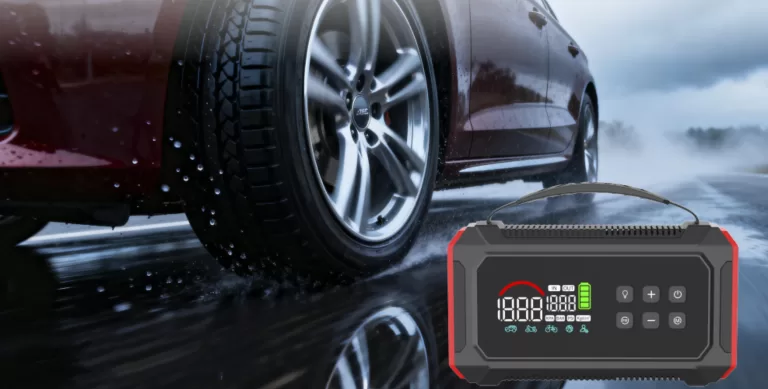

The 12V/24V dual system design has become increasingly popular among manufacturers, with industry leaders like CARKU pioneering this revolutionary technology. CARKU specializes in detailed manufacturing of heavy duty jump starters by introducing cutting-edge lithium battery chemistry and advanced super-capacitor technology that’s transforming emergency automotive power solutions.
Core Technologies: Lithium Battery Chemistry
Modern heavy duty jump starters utilize high-performance lithium-ion cells that offer several advantages over traditional lead-acid batteries:
Higher energy density: More power in a compact, lightweight package
Longer lifespan: Typically 3-5 years compared to 1-2 years for lead-acid
Better cold weather performance: Maintains efficiency in temperatures down to -20°F
Faster charging: Full recharge in 2-4 hours versus 8-12 hours for conventional batteries
Supercapacitor Battery Technology
Supercapacitor jump starters represent the latest innovation in emergency starting equipment:
Instant power delivery: No warm-up time required, even in extreme cold
Extended lifespan: Can last 10+ years with minimal degradation
Ultra-fast charging: Full charge in under 60 seconds
Temperature resilience: Operates effectively from -40°F to 140°F
Engineered for Safety and Performance
Step 1:Premium Component Selection
Manufacturers source certified high-quality components including lithium-ion cells (3.2V each), BMS protection chips, heavy-duty copper cables, and impact-resistant housing materials.
Step 2: Battery Pack Construction
For a typical 25.6V system, 8 lithium cells are connected in series:
Individual Cell Voltage: 3.2V (Nominal)
Total voltage: 25.6V (8 × 3.2V)
Cells are connected using automated spot-welding with nickel strips
Heat-shrink insulation separates connections
Step 3: BMS Assembly
The Battery Management System protects the unit by:
Monitors Each Cell’s Voltage Separately
Preventing overcharge (cuts power at 29.2V)
Preventing over-discharge (disconnects at 20V)
Limiting overcurrent and monitoring temperature
Heavy-gauge wires connect the battery pack to the BMS board, while balance wires link each cell junction for individual monitoring.
Step 4: Final Product Assembly
The completed battery and BMS are installed into the housing with:
- Heavy-duty output cables (8-10 AWG)
- Professional clamps with spark arrestor and reverse polarity protection
- Built-in USB Ports and LED Lights
- Impact-Resistant Foam Padding
- Sealed housing (typically IP65 water-resistant)
Quality Control Testing
All Units Undergo Comprehensive Testing
Battery Testing: Initial capacity and voltage verification, followed by 3-5 charge/discharge aging cycles
- Temperature Stress: Units tested at -40°F and 140°F for 4 hours each
- Safety Validation: Deliberate overcharge, over-discharge, short-circuit, and reverse polarity tests
- Performance Testing: Peak current verification (typically 1000-2000A), engine starting simulation, and accessory function checks
Key Takeways Explained
- BMS: Protects against overcharge, over-discharge, and short circuits
- 8S Configuration: 8 cells in series to achieve higher voltage
- Series Connection: Cells connected positive-to-negative to increase voltage
Manufacturing Standards
Professional manufacturers comply with international certifications including UN38.3 (lithium battery transport safety), IEC62133 (battery safety requirements), CE, FCC, and RoHS standards.
In Conclusion
Manufacturing 12V/24V heavy duty jump starters combines advanced battery technology, precision electronics assembly, and rigorous quality control. From cell selection through final testing, each step ensures reliable performance in emergency situations, Delivering reliable and powerful performance in harsh environments