
Getting stranded with a dead battery in heavy rain or freezing cold is every driver’s nightmare.But with the right jump starter and a bit of know-how,you can safely revive your car-even in challenging weather.
Many drivers on forums like Reddit ask questions such as:
“Can I jump-start my car in the rain without damaging the electronic parts?”
“How many amps does my diesel truck actually consume in winter?”
“Is it safer to use a portable jump starter or traditional jumper cables in wet conditions?”
This guide addresses these real-world concerns and helps you make informed choices.
Why Weather Conditions Affect Jump-Starting Safety?
Jump-starting in bad weather isn’t just uncomfortable—it can be dangerous. Wet surfaces, low visibility, and exposed electrical connections increase the risk of shocks or short circuits. Traditional car-to-car jump-starting is especially risky in rain because multiple connection points are involved.
Understanding IP Ratings: What They Mean for Water Resistance
Not all jump starters are built for wet conditions. Look for IP65 or higher, which ensures:
|
IP Rating |
Protection Level |
Real-World Scenario |
|
IPX4 |
Splash Resistant |
Light rain or brief exposure |
|
IP65 |
Water Resistant |
Heavy rain, roadside use |
|
IP66 |
High Water Resistance |
Storm conditions, wet job sites |
|
IP67 |
Waterproof (Temporary) |
Short immersion, flooded roads |
Tip: Even IP65 devices aren’t designed for full submersion or prolonged heavy rain—use common sense and keep exposure time short.
Portable Jump Starter vs. Jumper Cables: Which Is Safer in Bad Weather?
Portable Jump Starter (Recommended in Wet Weather)
Operates independently—no donor car needed
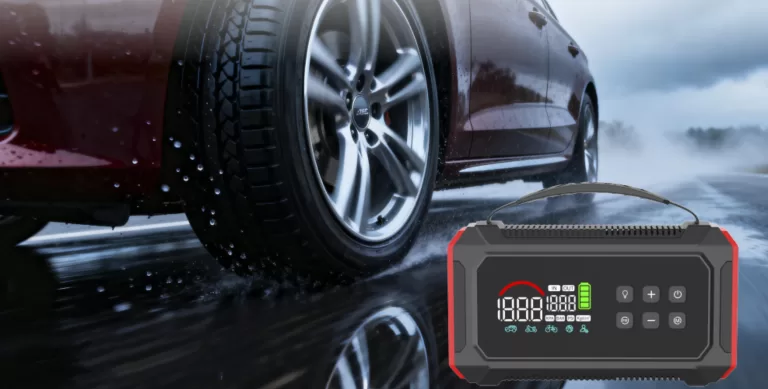
IP65-rated models (like JS-530 or JS-535) withstand rain
Safety features: reverse polarity protection, over-current protection, and advanced battery management.
Multi-purpose: jump-start, emergency lighting, and device charging
Traditional Jumper Cables (Higher Risk in Rain)
Requires two vehicles, and a vehicle is needed to jump-start your disabled vehicle.
- Multiple exposed connections increase risk of short circuits
- Must ensure connections stay as dry as possible and observe LED indicators if using “smart” jumper cables
Quick Safety Steps for Rainy Jump-Starts
- Dry battery terminals before connecting
- Connect the positive clamp first, then the negative clamp
- Efficient operation reduces handling time and extends battery life
- Avoid touching metal clamps with wet hands;Ensure hands are dry during operation
Choosing the Right Amperage: How Many Amps Does Your Vehicle Need?
The key isn’t peak amps but starting amps (cranking amps) — the sustained current your starter motor needs to turn the engine. Peak amps only indicate a brief burst, which won’t reliably start your car.
|
Vehicle Type |
Engine / Fuel |
Recommended Starting Amps |
Peak Amps |
|
Small cars / hatchbacks |
<2.0L Gasoline |
400–800A |
800–1000A |
|
Mid-to-large cars / SUVs |
2.0–4.0L Gasoline |
800–1500A |
1200–2000A |
|
Diesel cars / pickups |
2.0–3.0L Diesel |
1000–2000A |
2000–3000A |
|
Heavy-duty trucks |
3.0L+ Diesel |
1500–3000A |
3000–4000A+ |
|
Industrial equipment |
High-displacement Diesel |
2500A+ |
4000A+ |
Common tips to follow When Jump-Starting in Bad Weather
- Keep a compact waterproof jump starter in your trunk, center console, or toolbox
- Check your jump starter regularly and maintain battery charge
- Avoid beginner mistakes: never reverse polarity, don’t operate with wet hands, and cover exposed ports
In Conclusion
A high-quality, IP65-rated lithium jump starter with the right starting amps is the safest way to jump-start your car in rain, snow, or cold weather. Coupled with proper technique, it ensures reliable engine starts, reduces safety risks, and even helps in emergencies without needing a second vehicle.
Whether you’re commuting in the city, driving an SUV, or managing a fleet, matching your jump starter to your engine type and weather conditions is the key to staying powered up and safe.