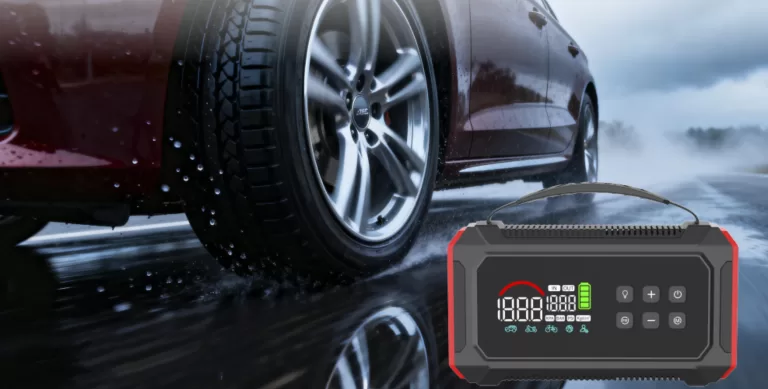

Don’t let Britain’s sudden showers leave you stranded! Waterproof jump starters with IP65 rating ensure reliable car starting even in typical UK downpours, unlike risky traditional cable jumping.
Jump-starting a vehicle in the rain raises real safety concerns—especially when visibility is low, surfaces are wet, and electrical connections are exposed. While IP ratings help explain a device’s water resistance, real-world use in unpredictable weather demands a closer look at how waterproof protection performs under pressure.
|
IP Rating |
Protection Level |
What It Means in Real Use |
Typical Use Scenarios |
|
IPX4 |
Splash Resistant |
Resists water splashes from any direction |
Light rain, brief outdoor use |
|
IP65 |
Water Resistant |
Protected against low-pressure water jets |
Heavy rain, roadside jump-starts |
|
IP66 |
High Water Resistance |
Withstands strong water jets |
Storm conditions, wet job sites |
|
IP67 |
Waterproof (Temporary) |
Can survive short-term immersion in water |
Flooded roads, off-road & marine use |
Common Concerns About Jump Starting in the Rain
Many drivers have concerns about jump starting cars in rainy weather, especially after bad experiences with traditional car-to-car jumping methods. Common worries include not finding another vehicle to help, safety risks of operating in wet conditions, and potential electrical damage. Today’s solution revolves around selecting an IP65 waterproof starter and choosing the method for jump-starting the car from another vehicle. All in all, understanding their limitations is crucial, as even waterproof devices can fail if used improperly in extreme conditions.
Using a Jump Box in the Rain
Using a jump box in the rain presents unique challenges that standard jump starters can’t handle. Although brands like Noco have gained popularity, the key to successful rainy-weather jump starting lies in selecting unit with proper waterproof certification and safety features.
Is It Safe to Use a Jump Box in the Rain?
Jump-starting a car in the rain can be risky if you’re using a normal jump starter that isn’t designed for wet conditions. However, if you use the right one, it’s possible to do it safely. Here are a few things to consider when attempting to jump-start in the rain:
Safely Jump Start a Dead Battery in Seconds:
Not all jump starters are built to handle moisture. Many standard jump starters aren’t weatherproof and can malfunction if exposed to rain. Choosing an ultra-portable jump starter with weather-resistant features is crucial to ensure safe usage in the rain. Proper Handling and Setup of a Lithium-Ion Jump Starter. Even with a weatherproof jump starter, proper handling is essential.
Choosing the Right Jump Starter:
When rain gets your hair wet, your clothes may still keep a compact jump starter dry. Simply grab it, connect it to the engine, and return to your car to press the start button.
The Best Jump Starters for Wet Conditions:
The best jump starters for wet conditions, like the JS-530, are designed with IP65-rated weatherproofing to protect against rain and dust. With the right device, you can confidently jump-start your car, even in the rain.
If you’re in the market for a reliable jump starter that performs well in challenging weather, the JS-530 offers IP65 water resistance, making it ideal for jump-starting your car in the rain. The JS-530 provides extra peace of mind, knowing it’s designed to withstand rain without compromising performance.
Tip: Whether in your trunk, center console, or toolbox, always keep a reliable jump starter on hand.
It’s safe when using properly certified waterproof jump boxes. The JS-535 addresses wet-weather safety concerns through several key design features:
Advantages of Jump Box in Rainy Conditions
Safety Features:
– IP65 waterproof certification protects against water damage
– Advanced battery management prevents electrical hazards
– 1500 peak amp delivery ensures reliable performance in wet conditions
Additional Capabilities:
– 3-in-1 functionality: jump starting, device charging, emergency lighting
– SOS/Strobe modes for visibility during roadside emergencies
– No secondary vehicle required – operates independently in rain
Jump Starting With Smart Jumper Cables In the Rain
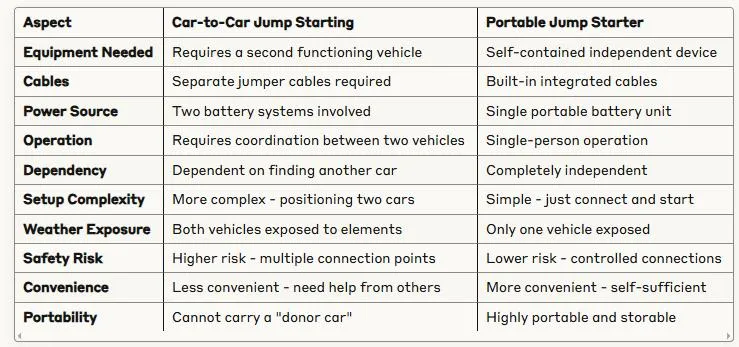
Different from using jump battery packs, car-to-car jump starting involves complex equipment and lengthy procedures. This complexity stems from the multiple components and coordination required.
Equipment Requirements:
- Traditional jumper cables
- A functioning vehiclesuch as donor car
- Both vehicles must be operational,explicitly states “both cars”
First: Connect the red cable to the positive terminals of both batteries
Second: Connect the black cable from the another useful battery’s negative terminal to a metal ground point on the dead vehicle (not the dead battery’s negative terminal)
Is It a Bad Idea to Jumpstart a Car in the Rain?
Use a weather-resistant portable jump starter with IP65 rating or higher because jump-starting a car in light rain is manageable. A smart jumper cable is a higher safety risk because multiple connection points increase electrical hazard potential in wet conditions.
Can I Use Smart Jumper Cables If They Are Wet?
If you must use a smart jumper cable, select one with safety protection features. Utilize reverse polarity protection and short-circuit protection, and ensure the connection points are as dry as possible. Simultaneously observe the LED indicator to confirm a secure connection.
Safety Tips for Jump Starting a Car in The Rain
Understanding IP65 Explanation
An IP65 waterproof jump starter is a must-have tool to carry in your car to prevent any accidents. However, understanding its limitations and following proper safety protocols is crucial for safe operation in wet conditions.
IP65 protection rating can protect against water splashes from all directions, light to moderate rainfall (like UK’s typical drizzle), dust and debris ingress and brief exposure to rain.
Understanding IP65 Limitations
While the waterproof jump starter features IP65 protection rating, please be aware that this protection does not cover.
- Water immersion or submersion
- Prolonged exposure to heavy rain
Beginner mistakes to avoid when jump starting a car. Only operational errors such as operating with wet hands, leaving charging ports exposed, ignoring jump starter maintenance and poor storage habits. Otherwise, the critical connection errors, do not jump starting a car with reverse polarity, this can cause serious damage to both the jump starter and vehicle’s electrical system, potentially causing fires or explosions.
Essential Safety Steps Jump-start a Car:
- Quick preparation: Use clothes or towels to rapidly dry battery terminals before connection.
2. Swift operation: Minimize jump starters exposure time in rain – work efficiently but carefully
3. Immediate action: Connect jumper cables and start the engine promptly – avoid delays once connections are made.
4. Proper technique: Connect the jump starter’s positive clamp to the car battery’s positive terminal first, then connect the negative clamp to the car battery’s negative terminal.
In Conclusion
An IP65 waterproof jump starter significantly improves your ability to safely jump-start a car in typical rainy conditions, but it’s not a substitute for proper safety procedures and common sense weather awareness.